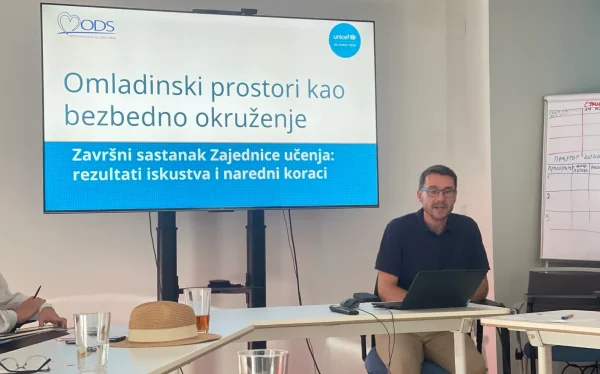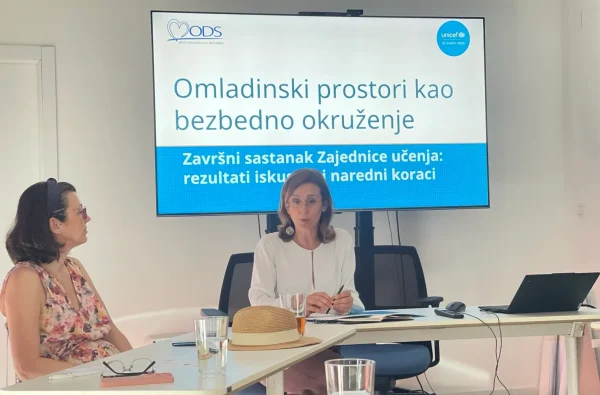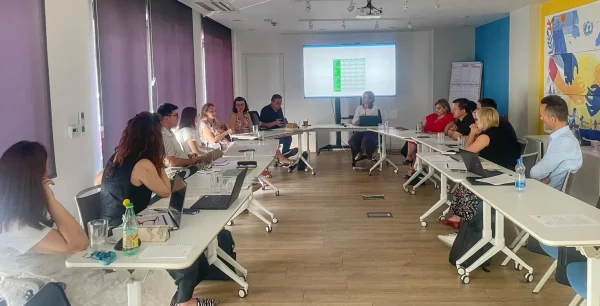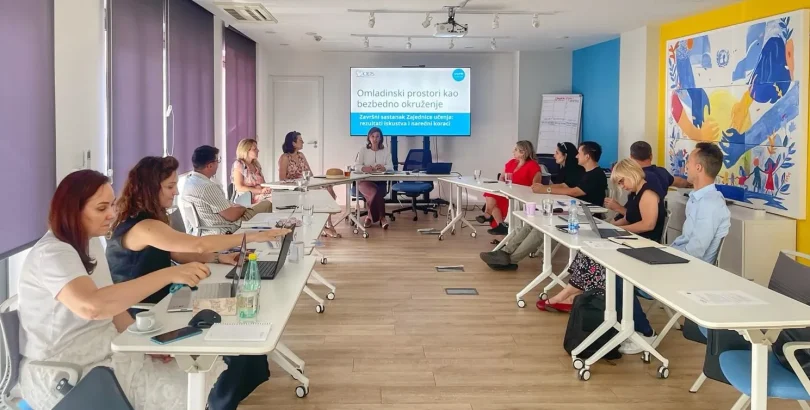
The final meeting of the Community of Practice was held at the UNICEF Office in Belgrade on 25 June. The meeting focused on the results achieved, lessons learned, and next steps in applying safeguarding standards and strengthening the protection of children and young people from sexual exploitation and abuse in youth settings.
The event brought together representatives of UNICEF, the Ministry of Tourism and Youth, MODS, trainers, mentors, youth offices and organisations working with children and young people from Ivanjica, Zrenjanin, Niš, Novi Sad and Bečej. Discussions focused on the programme’s results, experiences from local communities and opportunities to further integrate PSEA standards into the work of youth organisations and institutions.
Participants were presented with the results of the process implemented across 15 municipalities, as well as the experiences of trainers and mentors who supported organisations and youth workers. Particular attention was given to the challenges faced by youth centres, youth clubs and local youth offices, and to how the Community of Practice can continue to serve as a space for support, exchange and shared learning.
Participants emphasised that youth spaces should be places where young people feel safe, accepted and empowered to participate. Safeguarding policies should therefore not be viewed merely as formal documents or administrative requirements, but as practical tools that help place the well-being of young people at the heart of every organisation’s and institution’s work.
It was also stressed that policies and procedures must be understandable and accessible to young people. This is particularly important for young people with disabilities, those living in rural areas and others who face additional barriers in accessing support, information and safe spaces.
One of the key conclusions was that the Community of Practice, together with the network of trainers and mentors, can become an important resource for the continued support of youth centres, youth clubs, local youth offices and organisations working with children and young people. Participants highlighted that practitioners should not be left to navigate this process alone, but should have access to peer exchange, consultation, mentoring and opportunities to improve their practices together.
The meeting also concluded that the sustainability of this process requires coordinated support at several levels: practical support for organisations through models, training and mentoring; local support through youth centres, local youth offices and local authorities; and institutional support from the Ministry through funding calls, standards and publicly available resources.